
LEARN
The Many Talents of the Gods and Goddesses of Love
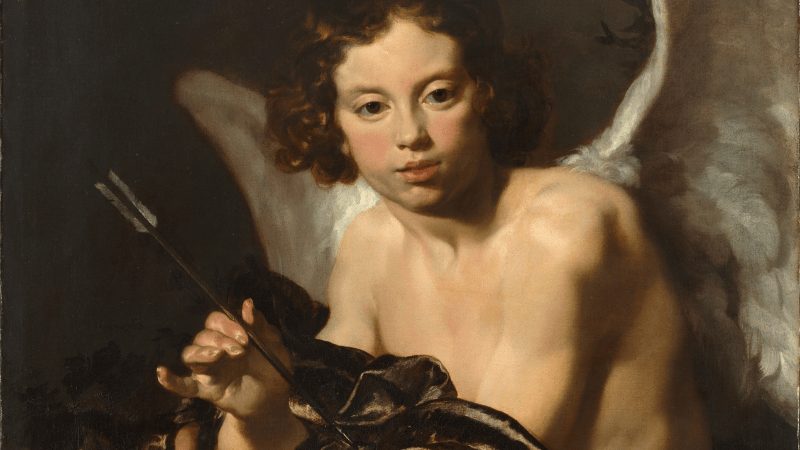
Is Cupid the original Benjamin Button?
Of course, it wouldn’t be Valentine’s Day without Cupid, the ancient Roman god of love. And while many of us are familiar with the depiction of Cupid as a plump, winged child, he wasn’t always envisioned as such.
Before the Romans adopted and renamed Cupid, he was known to the Greeks as Eros. In poetry from Greece’s Archaic period (650 to 480 BCE), Eros was represented as a handsome immortal who was irresistible to both man and gods. He was armed with a bow and a quiver filled with both golden arrows that aroused desire and leaden arrows that created aversion.
By the Hellenistic period (323 to 31 BCE), Eros was increasingly portrayed as a playful, mischievous child. This depiction was largely used when Eros was adopted by the Romans as Cupid, and it still serves as the model for how Cupid is portrayed today.
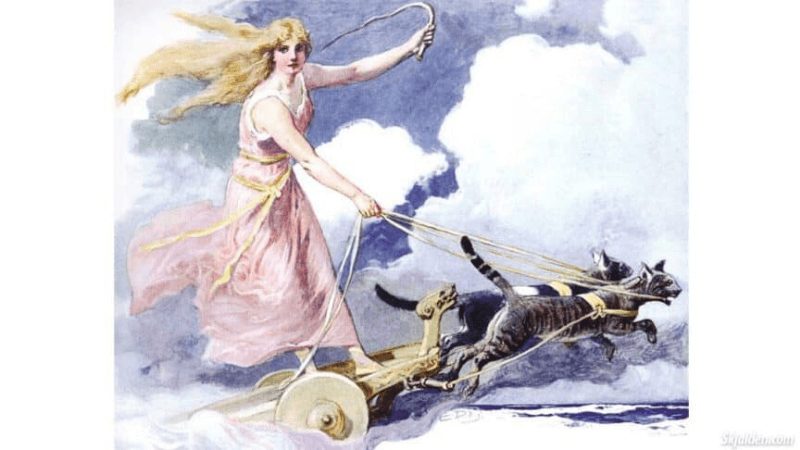
Freyja’s got style
One of the best-known and most important goddesses in Norse mythology, Freyja is associated with a number of functions, including love, lust, wealth, and magic, to name a few.
She was known to ride in style while fulfilling her many responsibilities. According to myth, Freyja traveled around the cosmos in a cat-drawn carriage while wearing her signature garment, a cloak made of falcon feathers. The cat carriage wasn’t her only unique mode of transportation. Pigs were sacred to Freyja, and she was sometimes depicted riding a boar with golden bristles.
Given her connection with love, fertility, beauty, and fine material possessions, Freyja is sometimes positioned as the “party girl” of the Norse deities. But she was still viewed as extremely powerful and influential. In fact, she was said to receive half of the warriors lost in battle in her hall, whereas Odin would receive the other half.
Hathor’s appreciation for makeup artistry
As with many divine beings of the ancient world, Hathor had many responsibilities. She was the Egyptian goddess of love, beauty, music, dancing, fertility, and pleasure.
In her role as goddess of beauty, she was also the patron of cosmetics. Wearing cosmetics was seen as a form of worship to Hathor, and offerings of mirrors or cosmetic palettes to her were common.
Originally, when both men and women died in ancient Egypt, they were said to assume the likeness of the god Osiris. But Hathor became such a popular deity that eventually, the female dead who were deemed worthy were thought to assume Hathor's likeness and qualities while the male dead continued to be associated with Osiris.
Trivia Questions
- RELIGION - Named for the Egyptian god of chaos, the occult organization founded in 1975 by Michael Aquino that has its roots in Anton LaVey’s Church of Satan is known as the Temple of what?
Reveal answer
Set - RELIGION - From the Latin for “calling,” what term is used in the Catholic Church for a call from God to a distinctive state of life, such as the priesthood?
Reveal answer
Vocation - MYTHOLOGY - The month of May is widely thought to have been named after which Greek goddess of fertility?
Reveal answer
Maia - MYTHOLOGY - What Greek god pursued Daphne relentlessly, despite her evasion and rejection, until she was turned into a laurel tree?
Reveal answer
Apollo - MYTHOLOGY - Similar to the Christian notion of heaven, what is the name in Norse mythology for the hall where the god Odin houses the dead whom he deems worthy of dwelling with him?
Reveal answer
Valhalla - WORDS - From the Greek for “primitive model,” what term is used for the constantly recurring motifs across works of art, literature, mythology, and cinema, such as the hero, the wise old man, the shadow, or the trickster?
Reveal answer
Archetypes - MYTHOLOGY - Known as a symbol of industry, the arm and hammer symbol was used in ancient times as the symbol for what god of fire?
Reveal answer
Vulcan - MYTHOLOGY - What is the name of the jackal-headed god of the afterlife and embalming in Egyptian mythology?
Reveal answer
Anubis