
LEARN
How the Trench Coat Stayed Fashionable For Over a Century
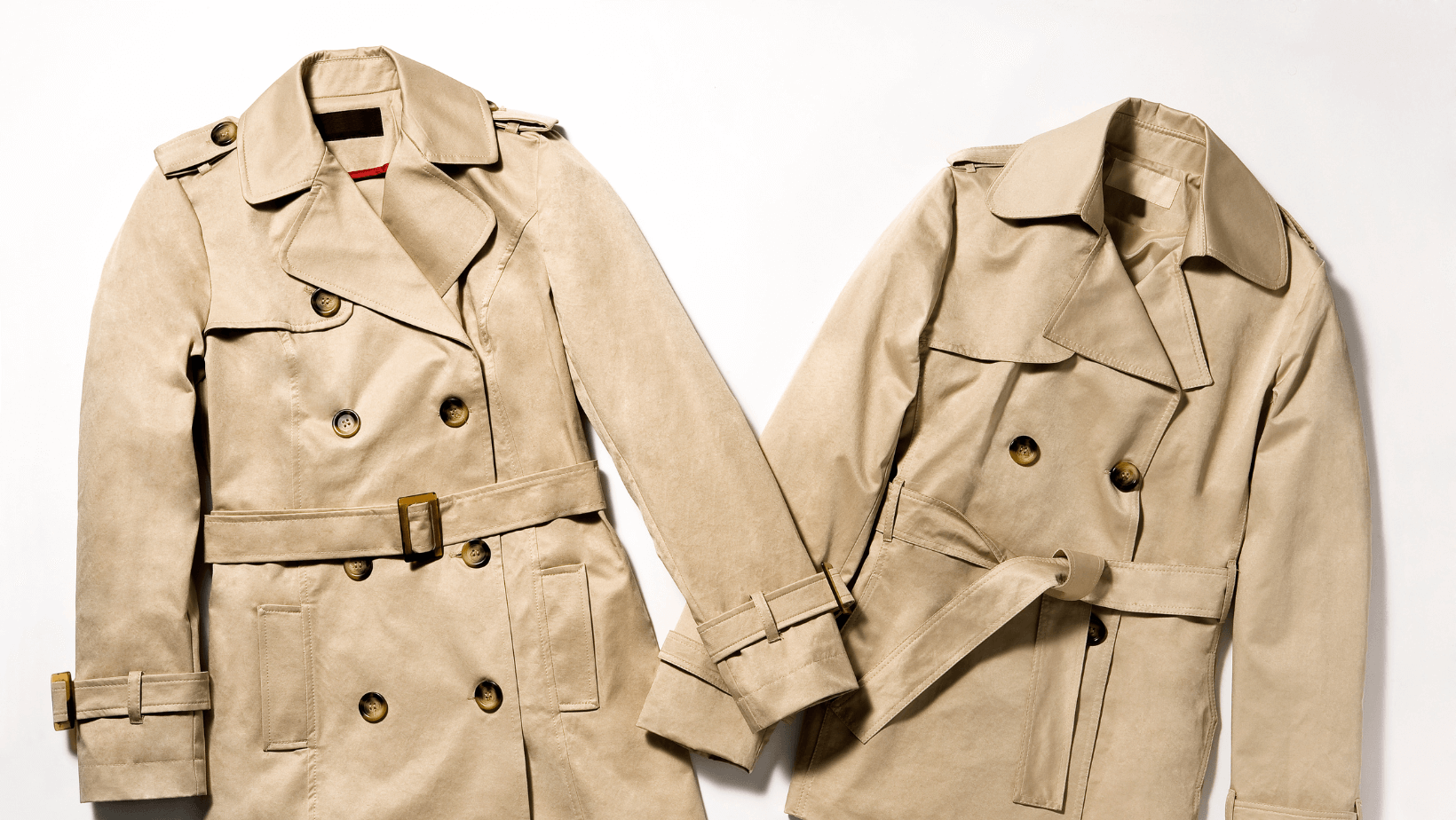
Developing The Trench Coat
It’s a common misconception that the trench coat was first designed to be worn by soldiers during World War I. In reality, the garment evolved from waterproof coats that were first created in the early 1820s. The original designs were made by Scottish chemist and inventor Charles Macintosh and British inventor Thomas Hancock. Hancock is also known as the founder of the British rubber industry.
Macintosh and Hancock’s rain-repellent coats were made from rubberized cotton. They were intended for well-dressed men to wear during outdoor activities including riding, shooting, fishing, and military service. The garment, originally called a “mack,” continued to improve along with technology, as the rubber coating became more breathable, less sweaty, and better at repelling water.
In 1853, tailor John Emary designed an improved version of the mack raincoat. He produced the garment under the name of his company, Aquascutum, from the Latin for “water” and “shield.” Thomas Burberry followed suit in 1856, founding his eponymous company. By weatherproofing the individual strands of cotton and wool fiber instead of the finished textile, Burberry’s “gabardine” fabric was the most breathable yet. Burberry’s improved coat design quickly became popular with explorers, aviators, and other adventurers.
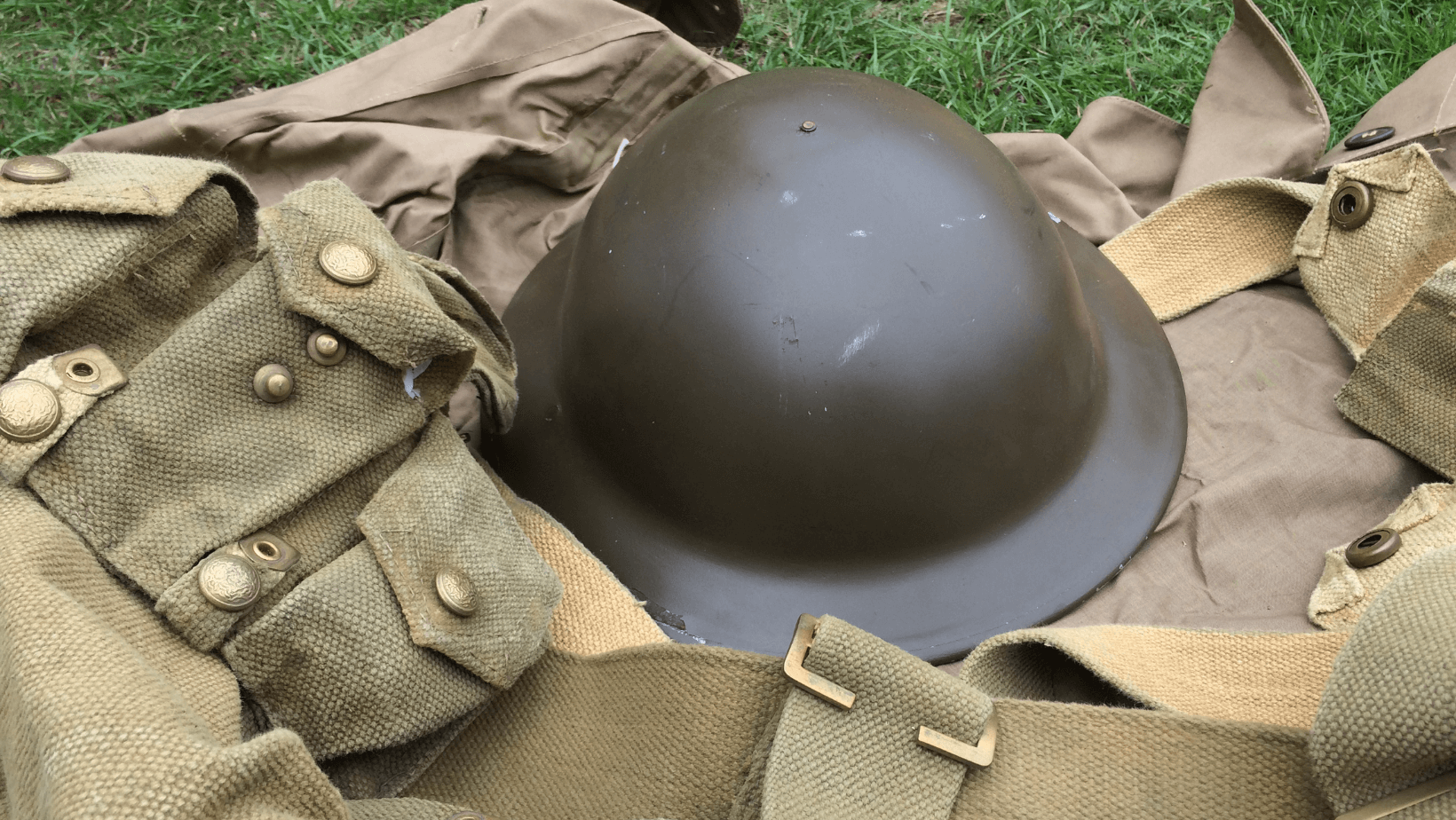
World War I Use
Both Aquascutum and Burberry claim credit for “inventing” the World War I trench coat, but in reality, the two companies further popularized an existing type of coat, adapting it for military use. Trench coats produced by Aquascutum and Burberry were expensive and accessible only to the well-to-do. But, much like the fashions of today, cheaper versions were marketed by numerous other retailers. During the war, both soldiers and civilians began wearing trench coats en masse.
The term “World War I trench coat” was first recorded in print in a 1916 tailoring trade journal. To fit the official definition, the garment must be double-breasted, tailored to the waist, and flared to a below-the-knee hemline. Functional aspects of the coat include the equipment of D-rings for hooking accessories, a caped back to allow water to drip off, a storm flap at the shoulders for ventilation, deep pockets, and buttons at the neck to protect the wearer from poison gas.
Some coats also included a removable liner that could double as bedding when needed. Ornamental shoulder pieces known as “epaulets” were added to indicate the military rank of the wearer. While there are now a wide variety of color options available, during the war, trench coats were issued in khaki to provide the best camouflage.
The Trench Coat In Fashion
Trench coats were worn again by officers during World War II, but in the 1940s, the garment first began to shed its overt military utilitarianism. This came hand-in-hand with the beginning of its romanticization by Hollywood. The trench coat became the signature accessory of journalists, gangsters, detectives, spies, and femme fatales portrayed on film.
On-screen, the trench coat became a symbol of dashing, intelligent leading men and women. It has even made appearances in some of the most iconic scenes in cinematic history. For example, trench coats were worn by Humphrey Bogart in Casablanca, Audrey Hepburn in Breakfast at Tiffany’s, and Meryl Streep in Kramer vs. Kramer, to name a few.
Today, a number of modern designers have revisited the trench coat, including Jean-Paul Gaultier, Yves Saint Laurent, and Ralph Lauren, among others. And, of course, it still remains a signature item for Burberry. Modern designs often shed many of the original details intended for military functionality, but the classic look of the trench coat has remained in fashion for over a century.
Weekly Trivia
Enter your guess to reveal the answer.
Weekly Trivia
- HISTORY - In what city did the trials against Nazi leaders take place after World War II?
Reveal answer
Nuremburg - MOVIES - What actress starred alongside Humphry Bogart and William Holden as the title character in the 1954 Sabrina film?
Reveal answer
Audrey Hepburn - FASHION - What much-maligned hairdo is often described as “business in the front and party in the back”?
Reveal answer
Mullet - SCIENCE - Acid rain is mainly composed of the oxides of which two elements?
Reveal answer
Sulfur and Nitrogen - PEOPLE - Infamous for his fiery temper, who was the first Scottish chef to win 3 Michelin stars?
Reveal answer
Gordon Ramsey